How Operators Replace Core Rebuilds with Quarterly Platform Releases
Agile Platforms are the Only Sustainable Path for Telecom Transformation
8 Minute Read

Telecom operators face a paradox: the industry is evolving faster than ever, yet the traditional path to transformation remains painfully slow. For decades, modernization meant multiyear rebuilds — massive, monolithic programs that froze innovation, delayed revenue, and often delivered solutions that were outdated the day they launched. But in a world shaped by 5G Standalone, AI-native workloads, edge-native design, and increasingly hybrid terrestrial and non-terrestrial networks, the mobile core is no longer a static backbone. It is becoming a living system — one that demands continuous evolution, not episodic reinvention. And that shift requires far more than new technology. It requires new ways of working.
Connectivity is becoming commoditized, 5G is widely deployed, and 6G specifications are forming for IMT-2030 (target 2030), yet revenue growth remains flat. Operators have invested billions in modernization, but industry studies consistently put digital-transformation failure rates near 70%, and most telco CEOs acknowledge that legacy IT systems and legacy processes block rapid innovation. The reasons are deeply structural. Legacy stacks are rigid and expensive to maintain, but the real bottlenecks often lie in the organizational layers above them. Multivendor patchworks create brittle integrations, but siloed teams and bureaucratic workflows slow everything from service launches to customer interactions. Every new product or partner adds operational complexity instead of capability. Meanwhile, digital-native competitors — MVNOs, OTT players, and cloud-born service providers — operate with lean teams, composable architectures, and continuous delivery pipelines. They experiment, learn, and scale at a pace traditional telcos cannot match because their operating models are designed for speed, not stability.
Customer expectations have shifted just as dramatically. Gen Z and Millennials, who now make up most of the modern workforce, no longer compare their telco to other carriers. They compare it to Spotify, Amazon, Apple, and Uber. They expect instant onboarding, personalized offers, seamless digital experiences, and real-time responsiveness. Yet the average telco NPS hovers around –1, while digital-native brands routinely score above +60. This is not a marketing failure. It is an operational and architectural failure rooted in slow IT pipelines, disconnected data, and legacy processes that cannot keep pace with customer expectations. The gap is not simply technological — it is cultural and procedural.
Inside the network, the pace of change has accelerated beyond what traditional rebuild models can support. AI workloads evolve monthly. RedCap IoT and NTN integration introduce new traffic patterns. Dynamic slicing requires real-time orchestration. Edge-native UPFs shift workloads closer to devices. Autonomous operations demand continuous learning loops. Static architectures — and static organizations — cannot keep up with this level of dynamism. Rebuilds, by definition, freeze innovation for years. Operators need platforms that evolve continuously, but more importantly, they need teams and processes that evolve continuously.
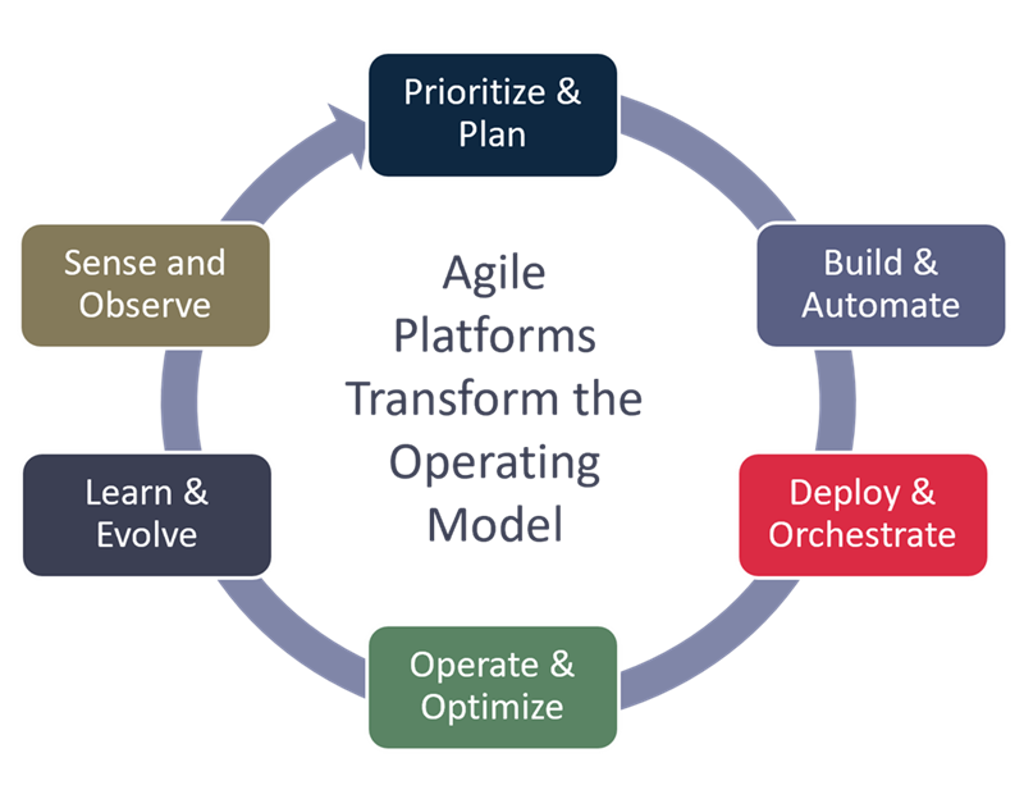 Agile platforms represent far more than faster rebuilds. They introduce a fundamentally different operating model. Modular, API-driven architectures allow components to be swapped or upgraded without touching the entire system, but the real shift happens when teams reorganize around these capabilities. Cloud-native, composable design enables microservices to scale independently and integrate new partners quickly, but it also requires cross-functional collaboration, shared accountability, and a culture of iterative delivery. Continuous integration and continuous deployment pipelines allow weekly updates instead of yearly releases, but they only work when organizations embrace version-controlled workflows, automated testing, and rapid feedback loops. Intent-based and autonomous operations shift the operator's role from manual configuration to defining desired outcomes, but this demands new skills, new governance models, and new decision-making frameworks. Emerging AI-native interfaces — including Model Context Protocol (MCP) and agent-to-agent (A2A) communication patterns — support real-time decisioning, but they require teams who understand data, trust automation, and design processes around closed-loop intelligence. Even no-code and low-code capabilities, which empower business teams to launch offers without waiting for IT, require new guardrails, new collaboration patterns, and new ways of managing risk. Technology enables agility, but people and processes operationalize it.
Rebuilds, by contrast, are slow, risky, and fundamentally misaligned with how networks and organizations evolve today. They freeze innovation for years, require massive upfront investment, and deliver static solutions in a dynamic world. They create technical debt the moment they launch and rely on outdated, resource-heavy internal processes that slow operators down. Rebuilds assume stability, but telecom now demands adaptability. They assume predictability, but modern networks — and modern customers — are anything but predictable.
Across every meaningful dimension, agile platforms outperform traditional rebuilds not only because they are technically superior, but because they enable healthier, more adaptive operating models. They accelerate speed to market by enabling teams to launch new offers in weeks rather than years. They reduce total cost of ownership by simplifying architectures, but also by reducing the organizational overhead required to maintain brittle integrations. They allow operators to run leaner IT operations, but more importantly, they allow teams to focus on innovation instead of maintenance. They reduce risk through parallel migrations and modular adoption strategies, but they also reduce organizational risk by avoiding the "big bang" culture that has derailed so many transformations. Most importantly, agile platforms enable continuous innovation, allowing operators to test, learn, and iterate rapidly while staying aligned with customer needs. They modernize without disruption and futureproof the network by adapting to new workloads without requiring redesign, but they also futureproof the organization by embedding adaptability into daily operations.
Agile transformation is already visible across the industry. Core SaaS platforms are enabling roaming-as-a-service models that reduce operational overhead and simplify cross-team coordination. Edge-native UPFs are supporting robotics, autonomous vehicles, and industrial automation with ultra-low latency, but they also require new operational playbooks and new enterprise-facing processes. AI-driven charging engines are generating dynamic monetization rules in real time, but they also require business teams to adopt new pricing strategies and new governance models. Partner ecosystems are being onboarded automatically with built-in revenue-sharing workflows, but this demands new commercial processes and new cross-functional collaboration. Dynamic slicing is being managed through automated lifecycle orchestration, but it also requires product teams, operations teams, and enterprise teams to work together in ways they never had to before. These examples demonstrate that agile platforms are not theoretical — they are reshaping how operators work.
Agile platforms enable telcos to adopt the service-strengthening qualities of techcos, but the transformation is ultimately human. The ideal operator delivers frictionless onboarding, flexible plans, and intuitive self-service apps, but achieving this requires teams who think in terms of customer journeys, not internal silos. It delights customers with digital lifestyle services and seamless partner integrations, but this requires organizations that can collaborate across domains and iterate quickly. It moves beyond connectivity by orchestrating ecosystems and exposing open APIs, but this requires new roles, new skills, and new operating models. Some operators are launching parallel digital brands on clean, agile stacks to test new ideas before migrating their broader operations, while others are adopting phased migration models that modernize iteratively with lower risk. In every case, the common thread is a shift toward lean, customer-centric, ecosystem-driven operations.
Transformation is not just a technology shift; it is an organizational one. Operators need to move from project-based thinking to platform-based thinking, from multi-year rebuild cycles to weekly evolution, from manual operations to autonomous operations, and from static architecture to programmable architecture. The transition from being connectivity providers to becoming ecosystem orchestrators is now essential. Leadership must drive this change from the top by breaking down silos, empowering cross-functional teams, and aligning the organization around the customer. With the right platforms, operators can redirect resources from maintenance to innovation, turning data into action and moving faster than legacy systems ever allowed.
Telecom transformation is no longer a destination — it is a continuous cycle. Agile platforms embrace that reality, while rebuilds resist it. Operators who adopt modular, intelligent, and continuously evolving platforms can unlock new revenue, reduce operational risk, deliver superior customer experiences, compete effectively with digital-native players, and move up the value chain. The operators who evolve continuously — not episodically — are positioned to define the next decade of telecom innovation.